AI in Law School: A Recap of the “Understanding AI” Event in Linz, Austria
Law students can use AI in their studies, provided they verify every result against the primary source. That was the key message of the “Understanding AI” event, held in Linz, Upper Austria, on 4 November 2026, which drew approximately 200 participants, with 30 attending in person and about 160 joining online.
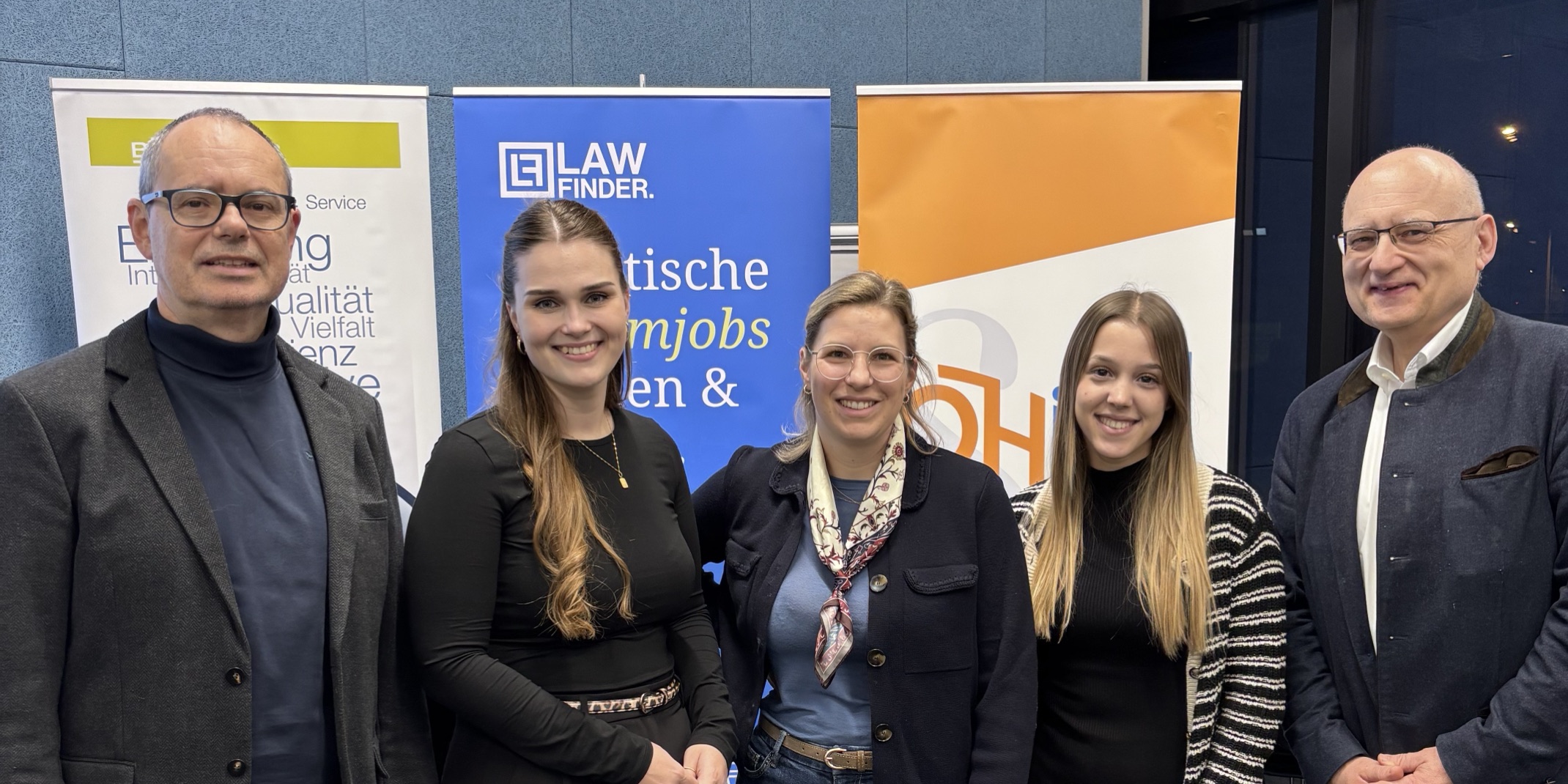
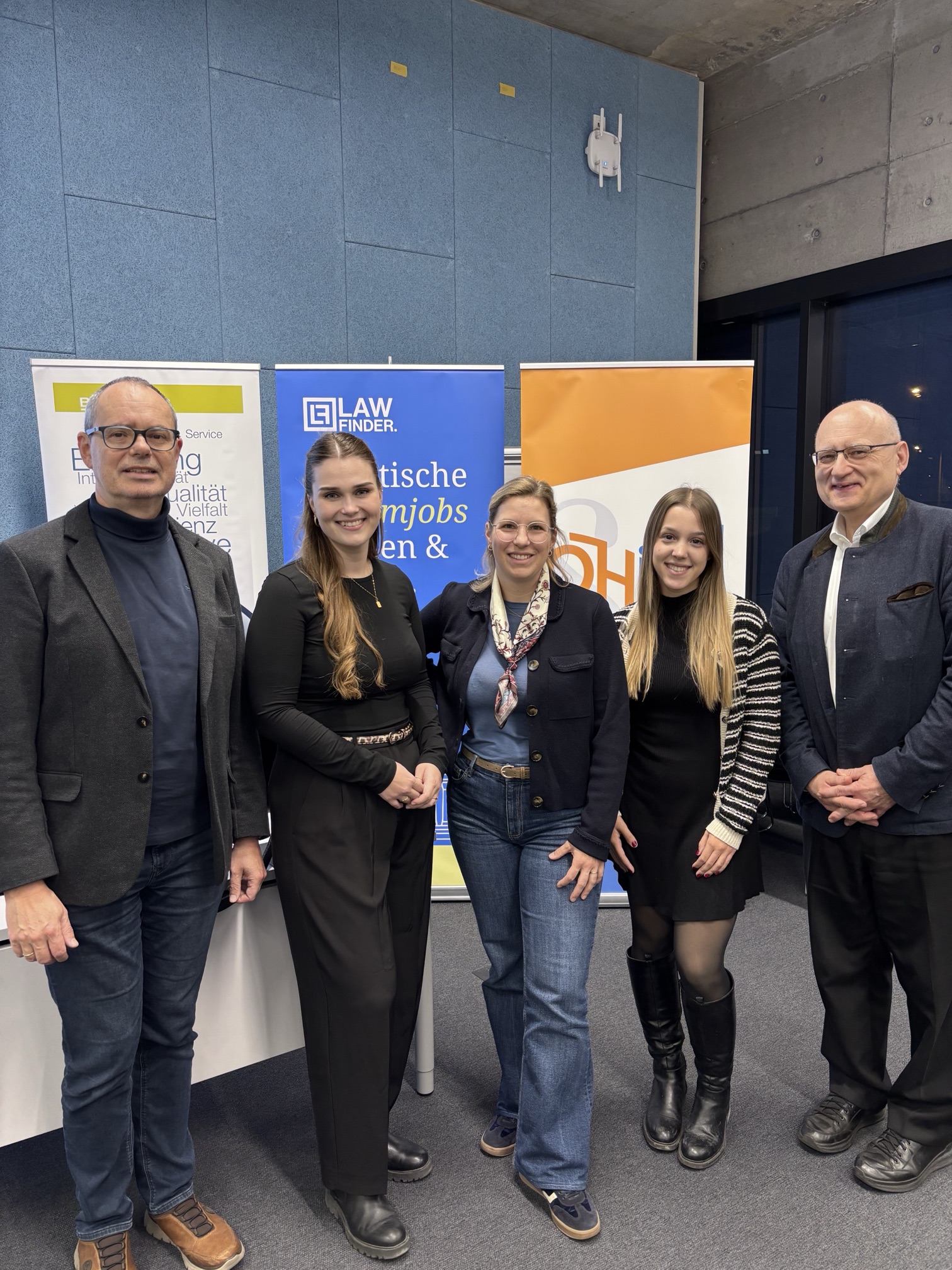
How is AI reshaping legal work, and what should law students start exploring now? These questions were central to an event held in Linz on 4 November 2026, organised by LawFinder, the Benn-Ibler law firm and Cybly in collaboration with the student organisation ÖH Jus at Johannes Kepler University Linz. Following opening remarks from the ÖH Jus team, including Stefanie Kohlberger and Anna Durstberger, attorney Dr. Stefan Eder and AI expert Christian Sageder explained how legal AI works. They introduced the sovereign, Austrian-developed platform Legalnetics.ai and demonstrated its practical applications live. Carolina Steiner then moderated an in-depth Q&A session. Lively discussions continued at the reception, underscoring the topic’s relevance to law students.
How widely is AI used in everyday legal practice?
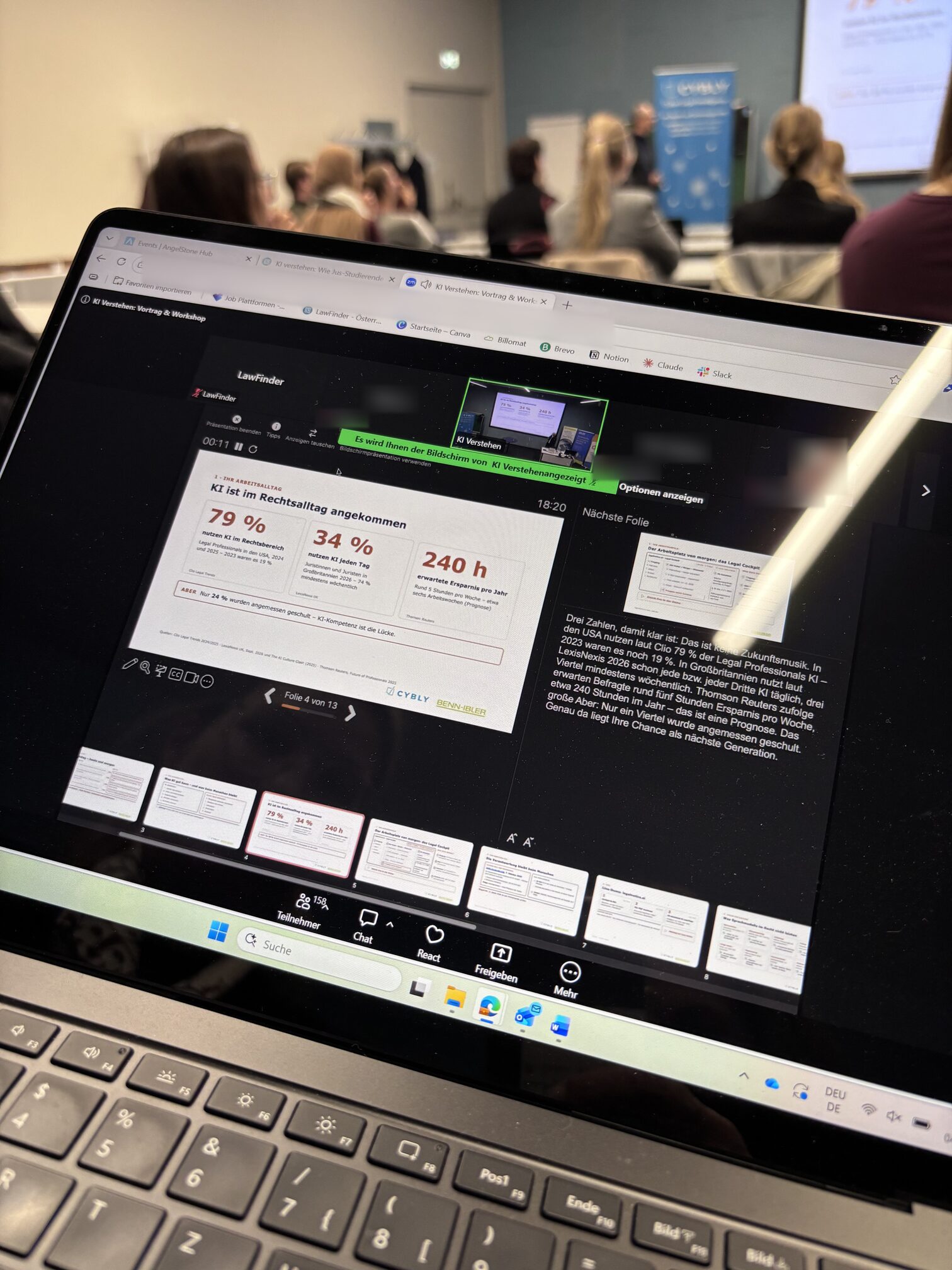
AI is now part of everyday legal work. According to Clio Legal Trends, around 79 percent of US legal professionals used AI in 2024/2025, compared with 19 percent in 2023. In the UK, LexisNexis (2026) reports that 34 percent of lawyers use AI daily and 74 percent at least weekly. Thomson Reuters projects time savings of around 240 hours a year. Yet, according to the studies presented, only 24 percent have received adequate training. This gap between adoption and training highlights a shortfall in AI expertise.
What tasks will AI take over, and which will remain the responsibility of lawyers?
AI supports searches, sorting, data extraction, summarisation, drafting and deadline reminders. Lawyers remain responsible for understanding and advising clients, weighing options, negotiating, making decisions and overseeing the work.
| Task | No AI | With AI |
|---|---|---|
| Inbox | Manually sorting and filing emails and mail | AI assigns everything to the correct file |
| Research | Spending hours searching through databases and commentaries | AI provides statutes and case law with sources; lawyers review them |
| Reading contracts | Page by page, identify the parties, deadlines and clauses | AI extracts the facts and organises them in a structured way |
| Drafting | Start from scratch or use an old template | Draft based on the law firm’s proven clauses |
Everyday law-firm work in the age of AI (presentation, 4 November 2026, Linz).
Why must AI results be checked against the primary source?
AI can produce answers that are convincing but incorrect. Lawyers remain responsible for legal briefs prepared with AI assistance. The Austrian Supreme Court’s decision 14 Os 95/25i, dated 7 October 2025, illustrates this point: an appeal, apparently drafted in part using AI and submitted without professional review, cited non-existent Supreme Court decisions and contained numerous misquotations. The Court noted:
“[…] arguments containing numerous misquotations (about both alleged procedural outcomes and Supreme Court decisions that mostly do not exist or do not concern the stated subject), apparently generated by so-called ‘artificial intelligence’ without professional oversight (see, however, § 9(1) RAO; RIS-Justiz RS0120395), fall far short of clearly and specifically identifying grounds for nullity […] and therefore preclude a substantive response.”
The appeal for annulment was dismissed without consideration of its merits. The GDPR, confidentiality obligations and the duty of due diligence under Section 9 of the Austrian Lawyers’ Code (RAO) apply regardless of the technology used. Under the AI Act (Regulation (EU) 2024/1689), AI use in the judiciary is classified as high-risk, whereas its use for routine office work in law firms is subject to comparatively little regulation.
How can law firms reliably implement AI?
Christian Sageder from Cybly gave a live demonstration of legalnetics.ai, explaining how the platform works and how its tools interact:
- A self-hosted language model interprets the user’s question and generates an answer through a familiar chat interface.
- Facts are drawn from a knowledge graph, which can incorporate confidential individual data, and from LawThek, a publicly accessible database of Austrian and EU legislation and case law.
- Rule-based modules determine deadlines, while every step is logged.
The demonstration emphasised that standalone large language models (LLMs) without access to verified legal databases are unsuitable for legal work. These models generate text based on statistical probabilities and can produce “hallucinations” – plausible-sounding but factually incorrect results. The presentation also highlighted that their knowledge is limited to their training data and that they do not understand when legal provisions apply. Keeping them capable of correctly applying the current legal framework to a given set of facts was therefore described as requiring continual, costly retraining – an approach considered impractical.
How is AI reshaping the training of young lawyers?
AI is increasingly taking over routine research, brief preparation and case-file work – tasks that have traditionally helped train young lawyers. Yet experienced lawyers will remain essential as AI trainers, users and supervisors, as well as decision-makers. Stefan Eder, a partner at Benn-Ibler and a business informatics graduate, explained:
“AI is changing the job landscape in law firms. Legal work requires new approaches to training in order to make the most of new technology.”
He also highlighted the prerequisites:
“For AI to take the lead, we first need comprehensive digitisation of legal documents and the publication of additional legal information.”
What can law students do today?
- Experiment and verify: Use AI tools during your studies and check every result against the primary source.
- Ask the right questions: Use neutral wording, request counterarguments and ask about gaps.
- Think systematically: Identify facts, deadlines and relationships – the foundations of AI.
- Gain practical experience: Explore internships, interdisciplinary projects and hackathons. ReMeP’s “Law As Code” Hackathon 2026/27 brings interdisciplinary teams together to develop working prototypes. Team registrations and project proposals can be submitted by 15 December 2026 (remep.net).
Conclusion
AI helps students and law firms with research, analysis and drafting, but does not replace human judgement or responsibility. Unverified results pose a risk, as illustrated by Austrian Supreme Court (OGH) decision 14 Os 95/25i. The way forward is to develop AI skills early, use sovereign tools, rely on verified sources and check every citation against the primary source.
FAQ
How can law students use AI effectively in their studies?
Students can experiment with AI tools and, for example, simulate exam situations: have AI applications work through question catalogues, phrase prompts precisely, request counterarguments, and ask about gaps or opportunities for follow-up questions. Every result must be checked against the primary source. The rules on using AI in exams and seminar papers are set by each university.
Why does AI sometimes cite non-existent court decisions?
Language models can invent decisions (hallucination) and are unaware of legislative amendments made after their training. In the case of OGH 14 Os 95/25i, this led to an appeal being dismissed. Citations from verified sources such as RIS or LawThek with a link to the source are more reliable.
What is legalnetics.ai?
legalnetics.ai is a sovereign, Austrian legal AI platform by Cybly for legal practice. Legalnetics extracts information from documents and identifies deadlines. The AI assistant researches with sources in LawThek. Lawyers review, approve and decide. For collaborative work, it offers features such as collections, projects, AI memory, a chat function and permission management for staff.
How can I participate in the “Law As Code” hackathon?
ReMeP’s Hackathon 2026/27 is aimed at interdisciplinary teams building a working prototype. Teams and topics can be submitted by 15 December 2026. More information is available at remep.net.